
Intellectual Trajectory
The trajectory of my intellectual work – from Islam and the Politics of Resistance in Algeria, through Islam and Politics in Northern Nigeria, to Political Islam – reflects a process of cumulative development rather than a shift in direction. Across these works the theoretical ambition deepens while the core methodological and analytical commitments remain consistent. The progression can be understood as a movement from empirical historical analysis and political sociology to systematic comparative theory.
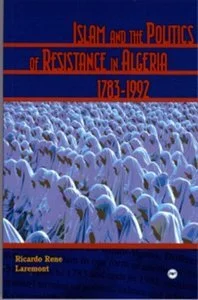
1. Islam and the Politics of Resistance in Algeria: Empirical Foundations and Political Sociology
My first major book is empirical and historically grounded. It is built on close attention to colonial legacies, social stratification, and patterns of state repression, and it approaches Islamist mobilization from the bottom up. Islamism is treated not as theology in isolation, but as a political response to exclusion, domination, and blocked access to power.
At this stage, my work is situated squarely within comparative politics and political sociology. The focus is on resistance, state–society relations, and the contingent nature of Islamist movements as political actors rather than civilizational expressions. This book establishes a methodological orientation that runs through my subsequent work: Islam understood as embedded political practice, inseparable from historical and institutional contexts.
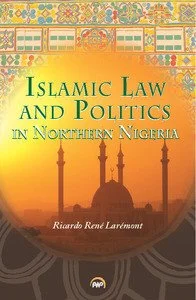
2. Islam and Politics in Northern Nigeria: From Resistance to Political Systems
The second book represents an expansion of analytical range rather than a conceptual rupture. The focus shifts from moments of resistance to Islamism as a sustained political presence operating within – and against – state structures. Greater attention is paid to institutional interaction, factionalism, regional variation, and strategic adaptation over time.
Here, the analytical move is from asking why Islamist movements emerge to examining how they function politically once they become political actors. This marks a transition from movement-centered political sociology to a more explicit analysis of political systems. Islamism is no longer episodic; it becomes a persistent feature of governance, opposition, and struggles over legitimacy.
3. Political Islam: Comparative Theory and Global Scope
Political Islam represents the synthetic culmination of the earlier work. It extends the core insights developed in the Algerian and Nigerian cases into an explicit comparative framework spanning the Middle East, North Africa, South Asia, and sub-Saharan Africa. The book develops typologies of governance – sharia-based, hybrid, dual, and secular systems – while integrating analysis of legal pluralism, ideological genealogy, state capacity, coercion, and transnational Islamist networks.
What distinguishes this work is its rejection of both reductionism and exceptionalism. Islamism is neither reducible to theology nor detached from it, and Muslim-majority states are compared to one another rather than implicitly measured against Western norms. The Algerian and Nigerian cases function here as theoretical anchors, not merely as historical illustrations.

Taken together, these works reflect a coherent intellectual trajectory:
| Phase | Core Question | Method |
|---|---|---|
| Algeria | Why do Islamist movements emerge as resistance? | Political sociology, history |
| Northern Nigeria | How do Islamists interact with power over time? | Institutional analysis |
| Political Islam | How do Islamist projects govern across contexts? | Comparative theory |
Across all three works, I treat Islamism as politics rather than cultural essence, insist on historical specificity, reject civilizational binaries, and seek to bridge area studies and comparative politics. This effort to move between thick local analysis and broader comparative theory is central to my scholarly project.
The movement from Islam and the Politics of Resistance in Algeria, to Islamic Law and Politics in Northern Nigeria, to Political Islam can be understood as a progression from local empirical analysis, to regional political dynamics, to global comparative theory. It reflects an approach to theorizing that begins in lived political realities and remains grounded in them even as its analytical scope expands.