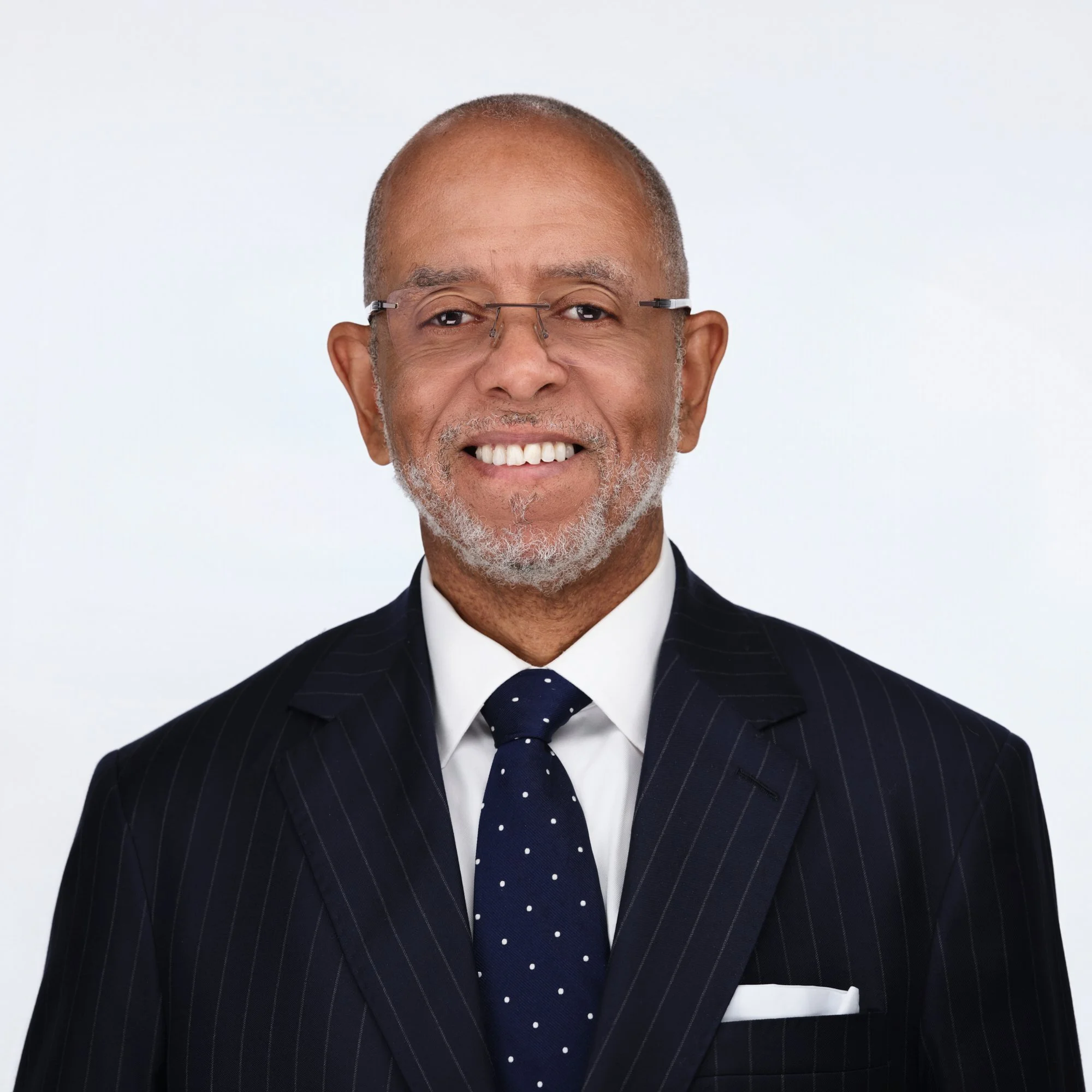
International Consultant | Political Scientist | Sociologist
Ricardo René Larémont, J.D., Ph.D., is a political scientist, sociologist, and international consultant whose scholarship examines political Islam, Islamic law, comparative governance, civil–military relations, conflict resolution, and International Relations theory. Across nearly three decades of research, teaching, academic leadership, and international advisory work, he has sought to explain how political authority is constructed, how legitimacy is established or contested, and how states and political movements pursue their objectives within unequal distributions of power.
Larémont is Professor Emeritus of Political Science and Sociology at SUNY Binghamton. He received his Ph.D. in Political Science from Yale University and his J.D. from New York University School of Law. His training in political science and law has shaped his enduring interest in the relationship among legal institutions, political authority, state formation, and the historical settings within which different forms of governance emerge. His work has concentrated geographically upon North Africa, West Africa, the Sahel, and the wider Muslim world.
A substantial part of Larémont’s scholarship has addressed political Islam, Islamic legal traditions, and state–society relations in Africa and the Middle East. His book Political Islam: Movements, Ideologies, and Governance in Comparative Perspective, published by Routledge in January 2026, examines Islamist ideas, movements, political strategies, and experiences of governance across the Muslim world. The book treats political Islam neither as a single ideology nor as an undifferentiated political phenomenon. It instead analyzes how Islamist movements have been shaped by distinct historical experiences, institutional environments, social constituencies, and relationships with the state.
His earlier books include Islam and the Politics of Resistance in Algeria; Islamic Law and Politics in Northern Nigeria; Revolution, Revolt, and Reform in North Africa; Borders, Nationalism, and the African State; and The Causes of War and the Consequences of Peacekeeping in Africa. His articles have appeared in journals including The Journal of the Middle East and Africa, The Journal of North African Studies, and Stability: International Journal of Security & Development.
Larémont has more recently turned his attention to International Relations theory. His current research develops the interrelated concepts of reputational capital, sovereignty entrepreneurship, regional statecraft, and portfolio diplomacy. These concepts explain how secondary and middle powers can convert political identity, diplomatic relationships, institutional access, specialized capabilities, historical ties, and claims to legitimacy into broader international standing and influence. The resulting agency does not eliminate material inequality or enable secondary states to compel more powerful actors. It can nevertheless widen their range of strategic choices, increase the value of cooperation with them, and allow them to shape the environments within which their interests and claims are evaluated.
These ideas are developed in his forthcoming book, Morocco and the Politics of Recognition: Sovereignty Entrepreneurship, Regional Statecraft, and Portfolio Diplomacy. The book examines how Morocco has connected its pursuit of recognition for its sovereignty claim over Western Sahara to a broader strategy encompassing economic diplomacy, security cooperation, religious diplomacy, development partnerships, regional engagement, and diversified relations with major powers. Morocco provides a particularly revealing case because its foreign policy demonstrates how a secondary power can coordinate distinct instruments of statecraft in pursuit of territorial, regional, and international objectives.
The theoretical importance of the project extends beyond Morocco. Reputational capital directs attention to the cumulative political value of judgments concerning a state’s authority, reliability, usefulness, and claims. Sovereignty entrepreneurship explains how states seek to reshape the political and diplomatic conditions under which contested claims are considered. Regional statecraft identifies the practices through which states cultivate influence within their surrounding regions, while portfolio diplomacy explains how they distribute relationships across multiple partners in order to preserve autonomy and reduce dependence upon any single power. Together, these concepts provide a framework for understanding how middle powers exercise bounded but consequential agency within a changing international order.
Larémont’s next research project applies this framework comparatively to Southwest Asia, with particular attention to Türkiye, Saudi Arabia, Pakistan, the United Arab Emirates, Qatar, and Oman. These states differ substantially in their material capabilities, political systems, strategic environments, and international ambitions. They nevertheless confront a common problem: how to pursue regional influence and preserve strategic flexibility within an international order increasingly characterized by competing centers of power. The project will examine how they cultivate reputational capital, develop specialized political roles, construct regional partnerships, manage relations with great powers, and combine established instruments of diplomacy in new ways.
Through this comparison, Larémont seeks to develop a more general theory of middle-power agency that preserves differences among cases while identifying the processes through which states convert limited or undervalued assets into international standing.
Alongside his academic work, Larémont has served as an advisor and consultant to international and governmental institutions, including the United Nations, the African Union, the European Commission, and the U.S. Departments of State and Defense. His advisory work has addressed governance reform, mediation, security-sector transformation, peacebuilding, and political transitions in fragile and conflict-affected states. It has been guided by the view that durable reform must be grounded in the political histories, institutional capacities, and social relationships of the societies in which it is pursued.
At SUNY Binghamton, Larémont served for five years as Chair of the Department of Sociology and later as Interim Dean of the College of Arts and Sciences. His administrative work emphasized faculty mentorship, interdisciplinary program development, and institutional stewardship. His experience as a scholar, teacher, and administrator has reinforced his commitment to building academic programs that combine intellectual rigor, comparative inquiry, and sustained engagement with the political challenges confronting contemporary societies.
Larémont is a Carnegie Corporation Scholar on Islam and a recipient of the SUNY Chancellor’s Award for Excellence in Teaching. He is fluent in English, French, and Spanish; possesses advanced reading and writing proficiency and intermediate speaking proficiency in Arabic; and has advanced reading proficiency in Italian. He continues to lecture internationally and to engage academic and policy audiences.
Across his work, he has maintained a consistent commitment to comparative analysis, historical depth, and the study of how political actors construct authority, accumulate legitimacy, and create opportunities for action within institutions and international orders they do not fully control.
Education
Yale University, Ph.D., Political Science, 1995
New York University Law School, J.D., 1979
New York University School of Arts & Sciences, B.A., cum laude, 1976
